How Standing Qigong Healed My Foot Pain When Fascia Stretching Wasn’t Enough

Last fall, I started having pain in my foot. It felt fine most of the time, but if it got bumped—especially in bed—I would shout as a sharp, intense pain radiated through my ankle. In November, during a bodywork appointment, the practitioner investigated and told me a bone felt dislocated. She gently guided it back into place, taped my arch for support, and voilà—the pain was gone. For a week.

The Foot Pain That Wouldn’t Stay Gone

After I removed the tape, some of the pain returned. It was never as intense as before the correction, but it lingered, coming and going. I spent the next few months pushing bones around in my arch, taping, and working on the fascia in my hips and legs. Feeling better one day and worse the next, I eventually took my foot to Kaiser for more diagnostics.

Medical Clarity and a New Question

The doctor examined it and ordered an X-ray. It revealed no structural damage and nothing dislocated. Whatever was going on appeared to be slightly different from the original issue. They recommended good supportive shoes—I was already wearing a brand from their approved list—and suggested a daily Achilles tendon stretch. I gave the stretch a try, and it seemed beneficial, but it wasn’t solving the underlying problem.

The diagnostic information was invaluable. Now that I knew my foot itself was structurally sound, I began thinking about what else might be contributing. I suspected a misalignment somewhere in the leg or hip. My knee had been clicking when I walked, after all.

April’s Simple Daily Practice

In April, I made a commitment to do two hours of qigong each day. It was a bucket-list item, not specifically aimed at my foot or leg, but I thought it would probably help. Didn’t every physical malady have an underlying energetic (as well as mental) component?

As part of my routine, I started including standing qigong. That practice became a true diagnostic.

The Standing Posture That Revealed the Twist

Standing in Wuji

After about 20 minutes of simply standing in the wuji posture, I widened my stance slightly and began to shift my weight. My knee didn’t buckle, but it had the distinct sensation of not being able to carry any weight at all—it felt completely locked up. I was surprised and curious. I wiggled it around, and it seemed to reawaken into a more stable configuration. Still, I knew it was likely slipping back into the twisted pattern that had been bothering my foot.

Each time I practiced the standing, it got a little better. Today, after finishing a 20-minute standing qigong session, my foot and knee felt about 95% better. I could still sense a faint something, but I had no trouble shifting weight or holding it on that leg.

Why Standing Qigong Felt More Complete Than Fascia Stretching

I’m still surprised and amazed at how effectively standing qigong resolved my issue. I knew standing was a powerhouse for energy cultivation and building structural integrity, but I hadn’t anticipated how holding a passive position could correct a twist in my physical body so profoundly. I had assumed the fascia work I’d done would address the alignment piece, but apparently it wasn’t robust enough for my particular pattern. In the traditional view, qi moves through the body via the connective tissues. Standing qigong, it turns out, may be one of the most powerful ways to work with the fascia—energizing it from within, removing blockages, and allowing the body to self-correct misalignments throughout the kinetic chain.

While fascia stretching has become incredibly popular for releasing tension and improving mobility, my experience suggests that standing qigong offers something deeper and more integrative. By holding space in a relaxed, mindful posture, it gives the body permission to reorganize its structure from the ground up while simultaneously cultivating qi flow. It doesn’t just mechanically stretch the fascia; it energizes and realigns it in a way that active, targeted stretching sometimes cannot achieve on its own.

Try Standing Qigong for Yourself

If this story resonates, I invite you to try standing qigong for yourself. Start with just 1-5 minutes in a relaxed wuji posture: feet shoulder-width apart, knees softly bent, arms at your sides with palms facing backwar, spine tall but not rigid. Breathe easily and naturally. You don’t need to “do” anything—just stand and notice what your body reveals. Many people are surprised by how much subtle shifting and realignment happens in stillness.

Have you experienced something similar with qigong, fascia work, or mysterious foot or knee pain? I’d love to hear your thoughts, questions, or stories in the comments below.

This is a personal account of my experience and is not intended as medical advice. Always listen to your body and consult qualified healthcare professionals for persistent pain or injuries.

What a 250-Year-Old Man Taught Me About Calmness and Daily Practice

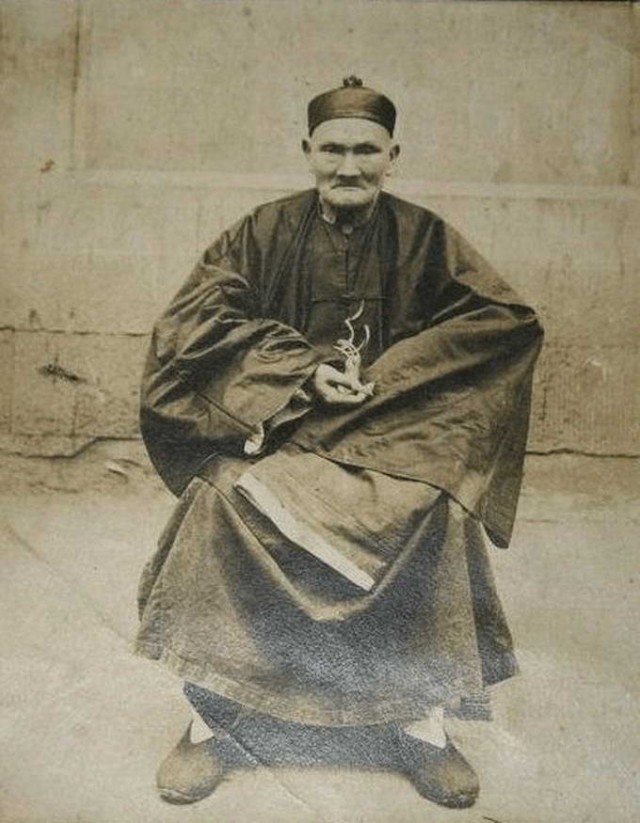
I’ve been reading The Immortal – True Accounts of the 250 Year-Old Man, Li Qingyun, looking for clues about what actually supported his remarkable longevity and vitality. Li Qingyun died in 1933 at the claimed age of 256. The book shares conversations he had with people in the early 20th century.

Early Life and Simple Foundations

He left home around age 10 or 13 to wander the mountains and gather herbs. For long periods he had little food and lived mostly on the medicinal plants he collected — many of them known for supporting longevity. This fits a classic longevity pattern: eating lightly, living in peaceful natural surroundings, and staying physically active through walking and gathering.

The surprising part is that he didn’t meet a Daoist master or learn formal longevity practices until he was already 139 years old. People who interviewed him noted that he wasn’t especially skilled at those practices. So what had been sustaining him all those years?

The Real Turning Point: A Calm Mind

Li Qingyun gave a clear answer when asked about reaching 139 while still healthy:

“The main reason I could live to 139 years old and still be healthy is because after I was forty years old, I could control my mind and not be disturbed by outside issues. My mind was always calm.”

This stands out. Many people look for exotic techniques or rare herbs, but he pointed to something much more ordinary and difficult: the ability to keep the mind steady and undisturbed by external events.

His Daily Practice: The Six Healing Sounds

Elsewhere, Li Qingyun attributed his good health to his breathing practice — specifically, the Six Healing Sounds. He learned them around age 30 and practiced them every day for roughly 110 years. Even after he became a Daoist and learned other methods, he never stopped doing the sounds.

He said the practice clears the body of emotional blockages and burdens. Given that he began the sounds in his thirties and reported a calm, steady mind by his forties, it’s reasonable to wonder whether this simple daily breathing practice played a major role in developing that mental clarity and emotional resilience.

He recommended doing the sounds between 11 a.m. and 3 p.m., speaking them softly rather than forcefully.

Why This Simple Practice Might Matter

I’ve experimented with the Six Healing Sounds before. I’ve taught versions of them in qigong classes and once spent a month doing just the wood-element sound (Shuh) every evening. I didn’t notice dramatic changes. But the idea of a consistent, daily practice of all six sounds — done at the recommended time, year after year — feels different. What kind of cumulative effect might that have on the nervous system, emotions, and overall vitality?

Of course, what worked for one person living in a very different time and environment may not translate directly. Still, the combination of a calm mind and a simple, repeatable daily breathing practice is compelling — especially because both are accessible and don’t require special equipment, teachers, or ideal conditions.

A Simple Daily Practice You Can Start Today

Reading Li Qingyun’s account inspired me to begin practicing the Six Healing Sounds every day myself. It’s a small commitment, but one that feels aligned with the steadiness and clarity he described.

If this story resonates with you, I gently invite you to try the Six Healing Sounds for yourself. Here is a short 4-minute practice you can follow along with:

Have you tried the Six Healing Sounds or another simple daily breathing practice? I’d love to hear about your experience in the comments.

This is a personal reflection inspired by historical accounts and is not medical advice. As with any new practice, listen to your body and consult a qualified teacher or healthcare professional if you have health concerns.

Sneeze Study Short – Scam Alert

It’s been over a decade since I was contacted by a scammer to participate in a sneeze study. He is still at it and another victim posted on my original blog post today. I created this short, with the help of Grok, to spread the word.

Please like it and share it so YouTube will present it to more people. He used to target healers, but who knows what he is up to now.